
Home / Tooth Extraction

Tooth Extraction
in Stuart, FL

Tooth Extraction Near You

A badly broken, deeply decayed, or infected tooth can cause ongoing pain and affect the surrounding teeth and gums. When a tooth cannot be repaired, removing it may help relieve discomfort and prevent further complications. Seeking care early allows our dentist to assess whether the tooth can be saved or if extraction is the more appropriate option. At Flosswell Dental, we provide tooth extraction in Stuart, FL, with a focus on preserving natural teeth whenever possible.

If you’re looking for a tooth extraction near you, our dental team will examine the affected tooth, explain your treatment options, and discuss what to expect before proceeding. Local anaesthetic is used to numb the area during the procedure, and our team will guide you through each stage of care.

What Is a Tooth Extraction?
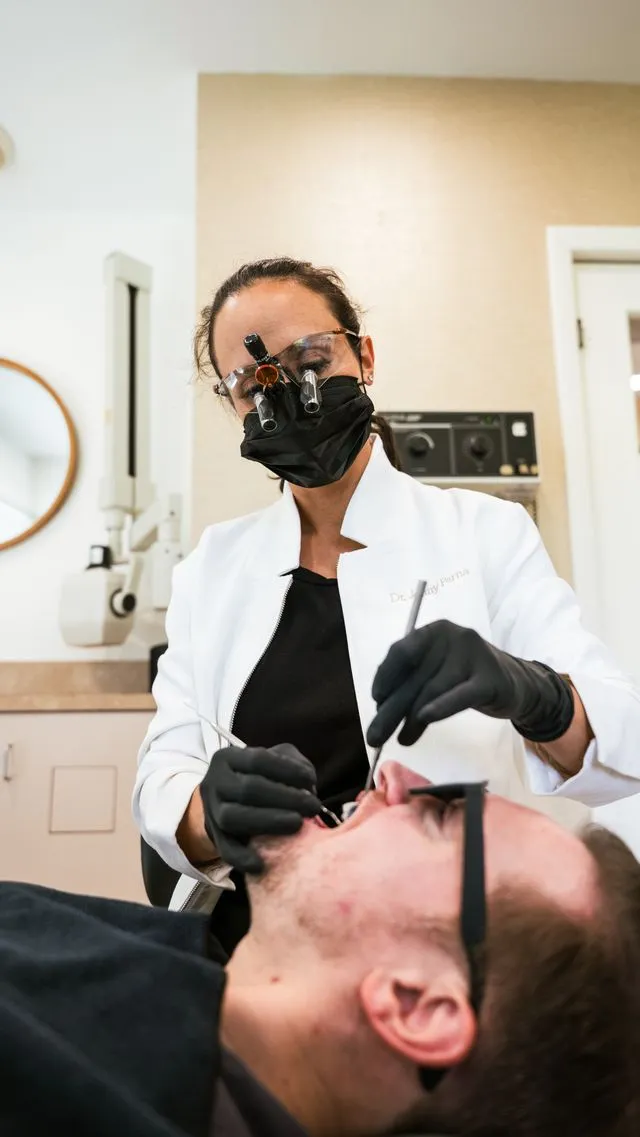
A tooth extraction is a dental procedure that involves removing a tooth from its socket in the jawbone. Although preserving natural teeth is generally preferred, extraction may be necessary when a tooth is too damaged, decayed, or infected to be restored.

Some extractions are straightforward when the tooth is visible and easy to access. Others may require a surgical approach, particularly if the tooth is broken near the gumline, impacted, or has not fully erupted.

Before recommending extraction, our dentist examines your tooth and may take dental X-rays to assess its roots and the surrounding bone. This helps determine whether the tooth can be repaired or whether removal is the most suitable option.

tooth extractions dr perna

When Might You Need a Tooth Extraction?

Not every painful or damaged tooth needs to be removed. In many cases, treatments such as fillings, crowns, or root canal therapy may help preserve the tooth. However, extraction may be recommended in certain situations, including:

  • Severe Tooth Damage: A tooth is too damaged or decayed to be restored with a filling, crown, or root canal treatment.
  • Overcrowding: A tooth needs to be removed as part of an orthodontic or other dental treatment plan.
  • Retained Baby Teeth: A baby tooth has not fallen out naturally and is affecting the eruption of a permanent tooth.
  • Impacted Teeth: A tooth is trapped beneath the gums and causes pain, infection, or pressure on neighbouring teeth.
  • Advanced Gum Disease: The bone and supporting tissues have deteriorated to the point that the tooth cannot be maintained.

If you’re unsure whether your tooth can be saved, our dental team will explain the available options and help you understand the reasons for any recommended treatment.

What Are the Benefits of Tooth Extraction?

When a tooth cannot be restored, timely extraction may help address the problem and protect your oral health. Potential benefits include:

  • Relief From Pain: Removing a severely damaged or infected tooth may help relieve symptoms caused by the affected tooth.
  • Management of Infection: Extraction may help address an infection when the tooth cannot be saved, although additional treatment may sometimes be needed.
  • Protection of Surrounding Tissues: Removing a tooth that cannot be restored may help prevent further damage associated with the affected tooth.
  • Planning for Tooth Replacement: Discussing replacement options in advance helps you understand how a missing tooth may be addressed.

We provide tooth extraction in Stuart, FL, when a tooth cannot be preserved through restorative treatment. Our dentist will assess the affected tooth, explain whether it can be saved, and discuss suitable replacement options if extraction is necessary.

What Happens During and After Your Tooth Extraction?

Understanding the process can help you feel more prepared for your appointment. At Flosswell Dental, the procedure and aftercare instructions depend on the tooth’s condition and the type of extraction required.

Before Treatment
Our dentist reviews your medical history, medications, and relevant health conditions. Dental X-rays may be taken to assess the tooth and surrounding structures.
During the Procedure
Local anaesthetic numbs the area. You may feel pressure as the tooth is removed, but you should not feel sharp pain. Sedation may be discussed if appropriate for your needs.
Immediately After Extraction
Gauze is placed over the site to help control bleeding and support blood clot formation. Our dental team provides instructions for protecting the area.
Recovery
Soreness and swelling generally improve over the first several days, although healing time varies. The gum tissue often heals over one to two weeks, while the underlying bone takes longer to heal fully.
Follow-Up Care
A follow-up appointment may be recommended depending on the complexity of the extraction and your recovery.

Follow the aftercare instructions provided by our dental team. Avoid smoking, using straws, or disturbing the blood clot during early healing, as these actions may increase the risk of dry socket. Contact our dental office in Stuart, FL, if pain worsens, bleeding continues, or you develop other concerning symptoms.

Why Choose Flosswell Dental for Tooth Extraction in Stuart?

Choosing a dental team that explains your options and guides you through the procedure can help you feel more comfortable about treatment. At Flosswell Dental, we focus on assessing the affected tooth and planning care around your needs.

Diagnostic Imaging
Dental X-rays may help assess the tooth's roots and surrounding bone before extraction.
Thorough Assessment
Our dentist evaluates whether the tooth can be restored before recommending removal.
Personalized Treatment Planning
We explain the procedure, recovery process, and potential tooth replacement options.
Comfort-Focused Care
Local anaesthetic is used to numb the treatment area, and sedation may be discussed when appropriate.
Guidance After Treatment
Our dental team provides aftercare instructions and explains when to contact us if concerns arise.

If you’re looking for a dentist near you for a damaged or painful tooth, our team can assess your situation and help you understand the next steps. Flosswell Dental also welcomes new patients seeking routine or urgent dental care.

Schedule Your Tooth Extraction Evaluation

If you’re looking for tooth extraction near you, Flosswell Dental can help you explore your treatment options for a painful or damaged tooth. Call (772) 288-9901 to schedule an evaluation and discuss your concerns with our team.

Visit us at 2075 S. Kanner Highway, Stuart, FL 34994, to learn whether extraction or another treatment may be appropriate for your tooth.

FAQ’s

Is extraction the only option for my damaged tooth?

Not necessarily. A filling, crown, or root canal treatment may help save a damaged or infected tooth. Our dentist will examine the tooth and explain whether restoration is possible or extraction is the more suitable option.

Is tooth extraction safe?

Tooth extraction is a common dental procedure, but it carries potential risks, as with any treatment. Our dental team reviews your medical history and medications beforehand, uses appropriate infection-control procedures, and explains how to care for the extraction site during recovery.

What happens if I do not replace an extracted tooth?

The need for replacement depends on which tooth was removed and your overall dental health. A missing tooth may affect chewing, spacing, or the position of neighbouring teeth. Our dentist can discuss suitable options, such as a dental bridge, implant, or partial denture, when appropriate.

What are the risks of tooth extraction?

Common effects include temporary soreness, swelling, and minor bleeding. Some patients develop dry socket, which occurs when the blood clot at the extraction site is lost or breaks down too early. Following aftercare instructions, including avoiding smoking and straws during early healing, can help reduce this risk.

How long does it take to recover from a tooth extraction?

Soreness and swelling often improve within a few days, while gum tissue commonly heals over one to two weeks. Healing time depends on the complexity of the extraction and your individual health. The underlying bone may take several months to heal fully.