
Home / Dental Crowns

Dental Crowns in Stuart, FL

Dental Crowns Near You

A cracked, heavily filled, or badly worn tooth can feel sensitive and may break further when you chew. Without protection, a small crack can spread and turn a repairable tooth into one that needs to be removed. Covering the tooth early may help preserve it and restore your bite. At Flosswell Dental, we provide dental crowns in Stuart, FL, with a focus on protecting natural tooth structure whenever possible.

If you’re searching for dental crowns near you, we’ll explain why a crown may be recommended and whether a smaller restoration could work instead. Each crown is carefully shaped and shaded to blend with your neighboring teeth for a natural-looking result.

What Are Dental Crowns?
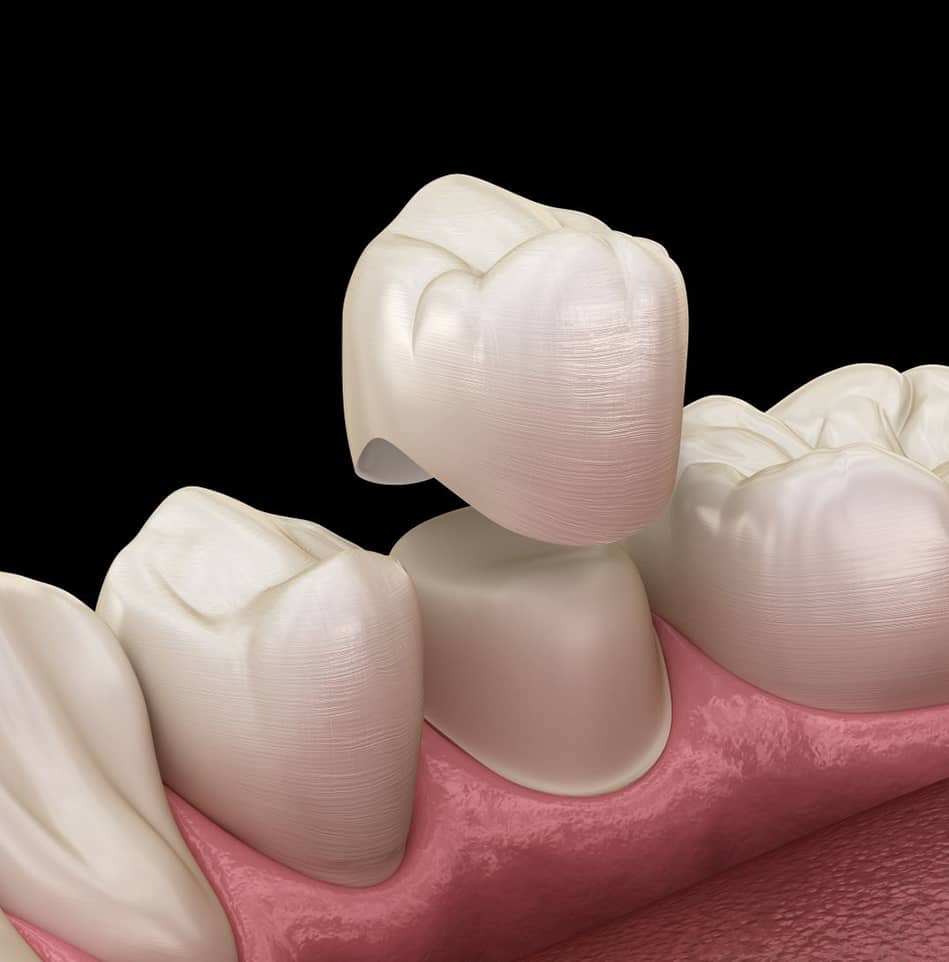
A dental crown is a custom-fitted cap that covers a damaged or weakened tooth from the gumline up, restoring its shape, strength, and appearance. Crowns are made from different materials, including porcelain, zirconia, and gold, and the right choice depends on the tooth’s location, your bite, and your aesthetic goals.

At Flosswell Dental, we use a digital scanner to record your tooth in detail, and in-office 3D printing helps us create accurate temporary crowns while your final restoration is made. This means fewer surprises at your second visit and a better-fitting final crown.

dental crowns in jupiter

When Might You Need a Dental Crown?

A dental crown may be a good option when a tooth is too damaged or weakened to be repaired with a filling alone. You may want to schedule an evaluation if you have:

  • A cracked or fractured tooth that hurts when biting down
  • A large or failing filling with too much decay or damage
  • A root canal-treated tooth that needs protection from fracture
  • Severe wear from grinding that has changed the tooth’s shape
  • Extensive decay with too little healthy structure for a filling
  • A discolored or misshapen tooth that affects your smile
  • A decayed baby tooth that needs to remain in place until it naturally falls out

If you’re unsure whether you need a crown, an evaluation with a dentist near you can help determine the suitable treatment based on your tooth condition, dental examination, and X-rays. The goal is to protect your natural tooth while preserving as much healthy structure as possible.

What Are the Benefits of Dental Crowns?

Placing a crown at the right time can extend the life of a tooth that would otherwise need extraction. Beyond preserving the tooth, crowns restore normal function and protect the surrounding teeth from taking on extra load. Benefits may include:

  • Structural protection for a cracked or weakened tooth that is at risk of breaking further
  • Restored chewing comfort once a painful or sensitive tooth is fully covered
  • A natural appearance with porcelain or zirconia matched to your surrounding teeth
  • Long-term durability with many crowns lasting 10 to 15 years or longer with good care
  • Prevention of further damage by sealing the tooth from decay at its edges
  • Support after a root canal to protect the treated tooth from fracture under biting pressure

If you’re searching for dental crowns near you, a dental evaluation can help determine whether a crown is suitable for your needs. Results and longevity depend on the crown material, the tooth’s location, your oral hygiene, and habits such as grinding or clenching.

What Happens During and After Your Dental Crown Procedure?

Your first visit focuses on preparing the tooth and planning your restoration. Dr. Perna and Dr. Holley numb the area, reshape the tooth to hold the crown, and take a digital scan for an accurate fit. A temporary crown protects your tooth while your permanent crown is being made. Depending on your situation, the appointment may include:

Health history review
Share your medications, any sensitivity in the tooth, and any grinding or clenching habits
Tooth preparation
The tooth is carefully reshaped to make room for the crown and help it fit comfortably.
Digital scan
Captures precise measurements so your crown fits accurately.
Temporary crown placement
Protects the prepared tooth between visits
Final crown bonding
Placed and adjusted at the second visit to confirm the fit, color, and bite
Results review
Dr. Perna and Dr. Holley explain how to care for the crown and set a follow-up schedule.

Most crowns require two visits about two to three weeks apart. Brushing, flossing along the crown edge, and attending regular checkups help prevent decay from forming where the crown meets the tooth.

Why Choose Flosswell Dental for Dental Crowns?

If you’re considering dental crowns in Stuart, FL, we’ll first identify what caused the damage, check for cracks that extend below the gumline, and make sure the tooth is healthy enough to restore before any preparation begins. Our approach includes:

Modern Technology
A digital scanner and in-office 3D printing help us create accurate, well-fitting crowns efficiently.
Sedation Options
We offer sedation for patients who feel anxious about dental procedures, so crown treatment proceeds at a pace that feels comfortable.
Same-Day Emergency Care
If a crown breaks or a tooth cracks unexpectedly, we offer same-day appointments to protect the tooth right away.
Conservative Recommendations
Dr. Perna and Dr. Holley recommend a crown only when it's the most appropriate option, and will suggest a smaller restoration if it can do the job.
Welcoming New Patients
We are currently accepting new patients at our Stuart office, and same-day appointments are available for urgent needs.

Ready to Protect Your Tooth? Book an Evaluation Today

A well-fitted crown can restore your bite and help a damaged tooth last for years. At our dental office in Stuart, FL, we believe a weakened tooth is worth protecting before it breaks. We are currently welcoming new patients, and same-day appointments are available. Call us at (772) 288-9901 or visit us at 2075 S. Kanner Highway, Stuart, FL, 34994. You can also book your evaluation online.

FAQ’s

Do I need a crown, or will a filling work?

It depends on how much healthy tooth structure remains. Small cavities can usually be filled, but large fillings, cracks, and teeth treated with a root canal often need the full coverage a crown provides. Dr. Perna and Dr. Holley will recommend the most conservative option that will hold up long-term.

Are dental crowns safe?

Yes. Crowns are one of the most common dental restorations, and modern materials are durable and well tolerated by the gums. Let us know about any metal allergies so we can choose a suitable material.

Are there any risks with dental crowns?

Some patients notice temporary sensitivity after treatment. Porcelain can chip under heavy force, and decay can form at the crown edge if plaque builds up, so daily cleaning matters.

How long does crown treatment take?

Most crowns require two visits about two to three weeks apart while the lab makes your final crown. Your bite usually feels normal again within a few days.